How Does a Steam Milk Frother Work? Explained
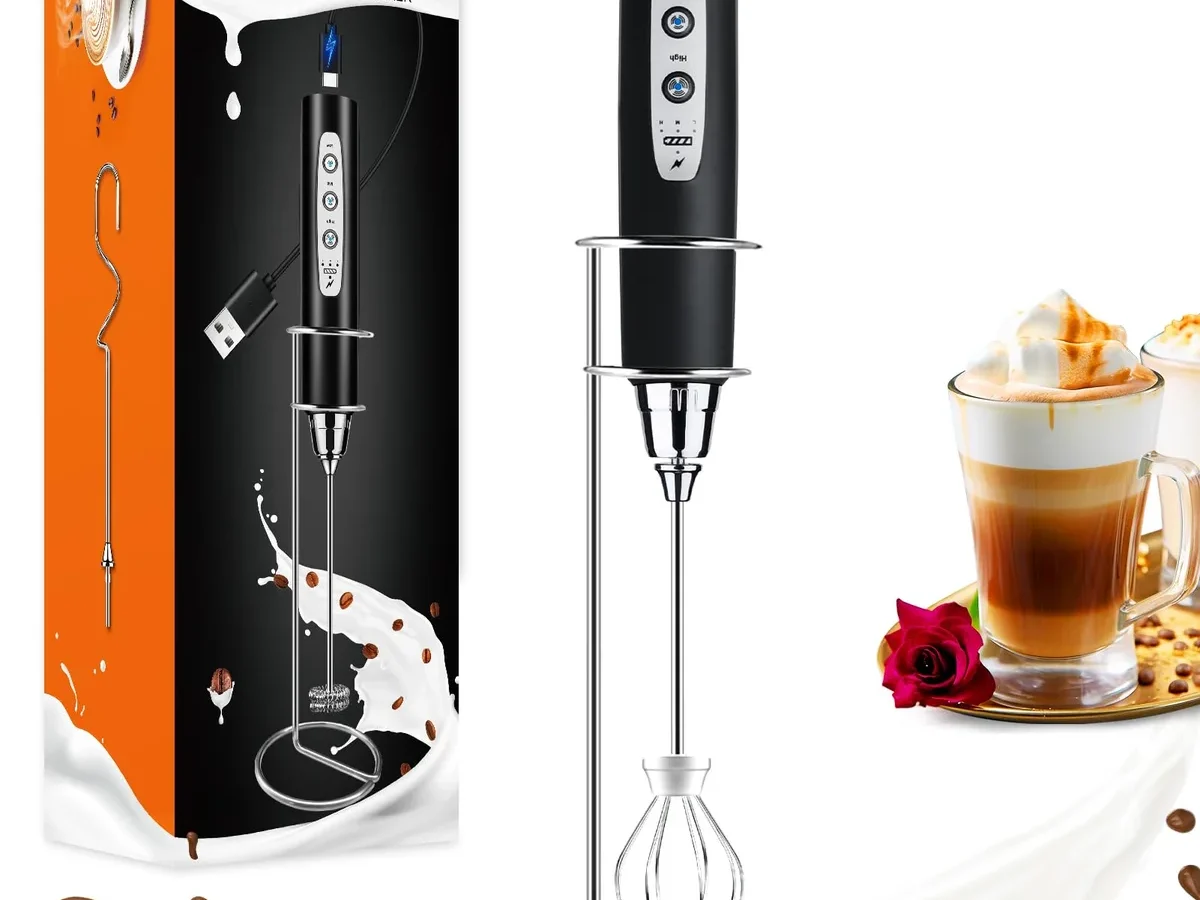
You’ve seen baristas pour silky microfoam into espresso. You want that at home. But the world of steam milk frother explained articles on product pages is confusing, wands, gadgets, pitchers, price tags from ten to five hundred dollars.
Here is the honest breakdown of what actually matters.
In our research across user reviews and specialty coffee training standards, the single biggest factor isn’t price. It’s the type of foam your drink needs and how much time you’ll spend cleaning. The Specialty Coffee Association recommends milk steamed to 140 to 155°F for optimal sweetness and texture.
That’s the benchmark. Let’s start there.
Quick Answer
A steam milk frother heats and aerates milk. Steam wands create microfoam for latte art. Automatic frothers do it with one button.
Handheld whisks are cheap but produce big bubbles. Your choice depends on convenience versus texture.
Why the Type of Frother Matters More Than You Think
Not all frothing methods give the same result. A wand that works great for cortados may frustrate you if you only make iced lattes. Milk fat content plays a big role too.
Whole milk froths differently than oat milk.
Aggregate reviews show that people who buy a cheap handheld often switch to an automatic within three months. Why? Cleaning.
A wand requires purging, wiping, and sometimes descaling. An automatic pitcher just goes in the dishwasher.
If you’ve ordered a perfect cappuccino at a spot like Alltimelosangeles, you know what good foam tastes like. That texture comes from heat control and aeration technique. Your hardware either helps or hinders that process.
The Four Main Frothing Methods – How They Work
Steam wand, integrated or stovetop. Uses pressurized steam to heat and stretch milk. You control angle and immersion depth.
Best for microfoam. Takes practice.
Automatic electric frother, self-contained unit with a heating element and spinning whisk. Set temperature, press a button. Produces dense foam or cold foam.
Repeatable and low effort.
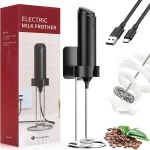
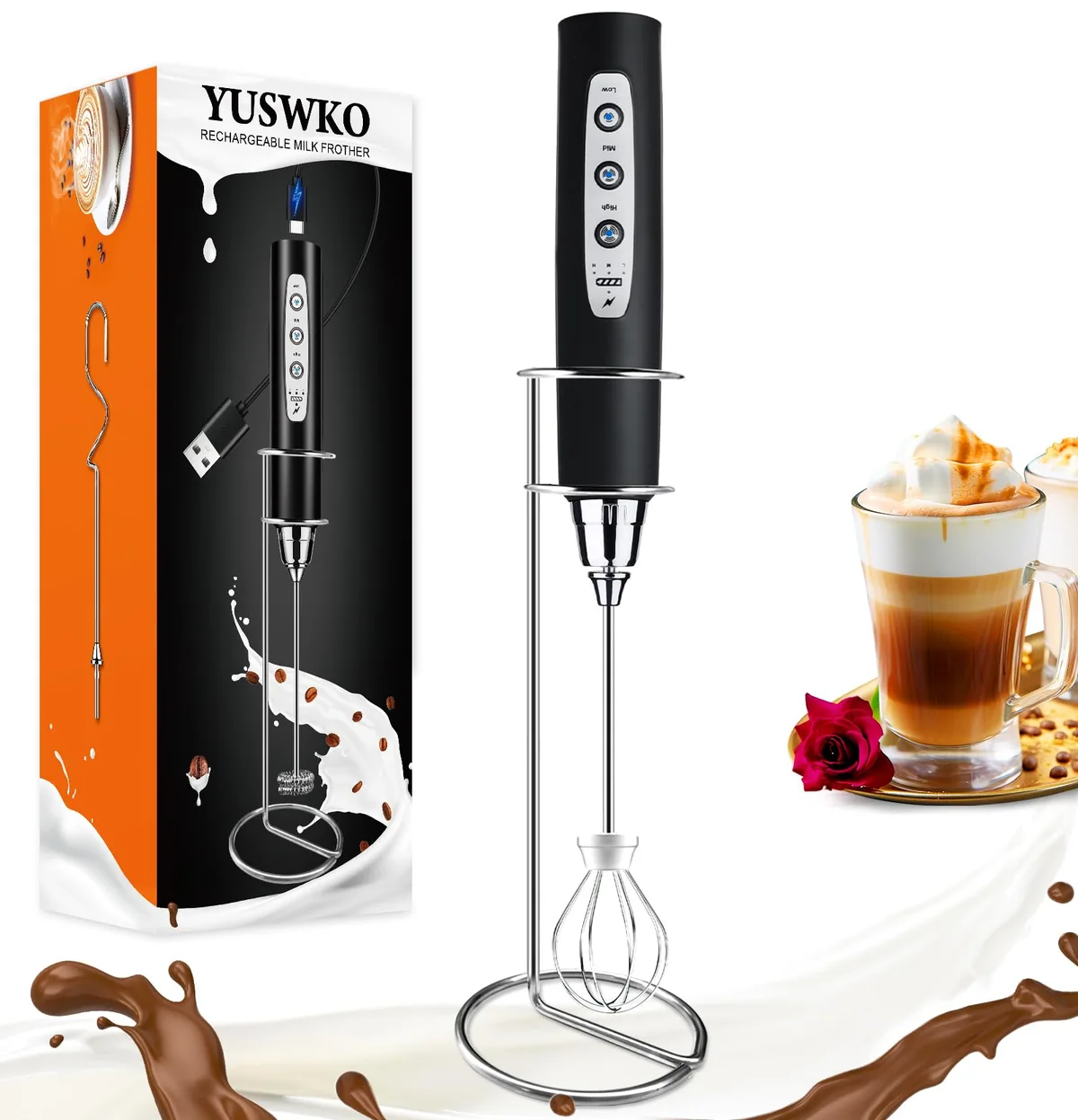
Handheld immersion frother, battery-powered whisk you dip into a mug of warm milk. Creates foam by agitating the surface. No heat.
Foam is airy with large bubbles.
French press, pump the plunger in warm milk. Decent foam in a pinch. Zero cost if you already own one.
No heat unless you microwave the milk first.
Steam Wand vs. Automatic Frother: Side-by-Side Comparison
These are the two most common choices. Here is how they stack up.
| Factor | Steam Wand | Automatic Frother |
|---|---|---|
| Foam texture | Silky microfoam, latte-art ready | Dense, often with larger bubbles |
| Ease of use | Moderate learning curve | Push-button simple |
| Cleanup | Purge and wipe immediately | Removable parts, dishwasher safe |
| Milk variety | Works with most milks | Some models struggle with plant-based |
| Noise | Loud during steam | Quieter (60 to 70 dB) |
| Cost (equipment) | Built into espresso machine ($300+) | Standalone $50 to $200 |
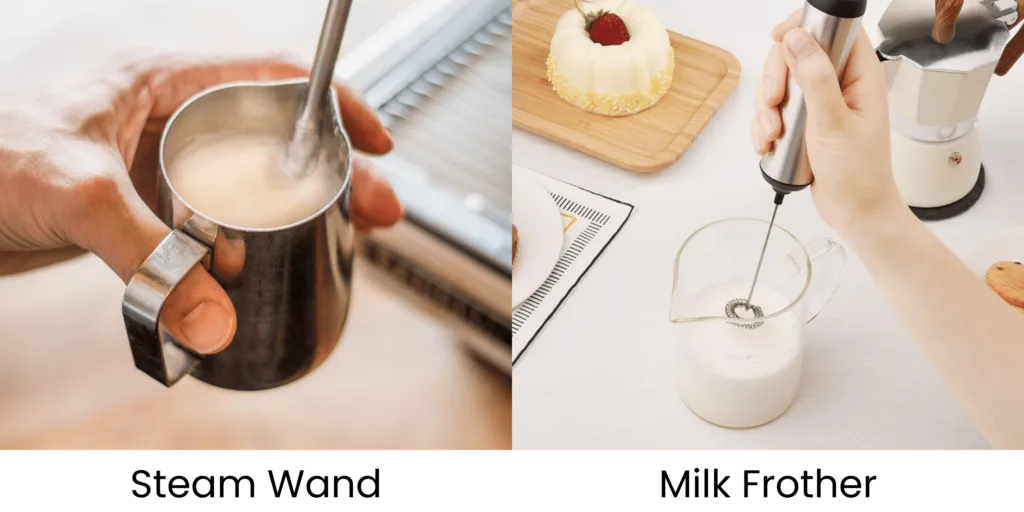
Our research indicates that the automatic frother wins for speed and consistency. The steam wand wins for control and texture, assuming you’re willing to practice.
If you want to match what you’d get at a place like Sol Agave American Fork, the wand is the only choice. But for a quick weekend latte, the automatic is hard to beat.
Which Frother Is Right for You? Matching the Tool to Your Routine
You own an espresso machine, use the steam wand. You already have the heat source and pressure. Learning the technique pays off with every drink.
You make one or two lattes per day, automatic electric frother. It saves time, heats precisely, and is easy to clean.
You drink iced coffee with cold foam, automatic frother with a cold-foam setting. Handheld can’t heat, and a steam wand only does hot.
You froth milk once a week, handheld immersion or stovetop steamer. Spend $10 to $40 instead of $100+.
You want to avoid appliances altogether, French press method. Works without buying anything new.
The right choice is the one you’ll actually use. A steam wand collecting dust is worse than a handheld you grab every morning.
If you’re planning to make specialty drinks at home, it helps to see what real cafes charge for similar creations. Browse the Voltaggio Brothers Steak House Menu With Prices for a sense of what a skilled barista delivers.
The Budget Options: Handheld Frothers and Stovetop Steamers
Not everyone needs to spend a lot. These two methods are affordable and effective within their limits.
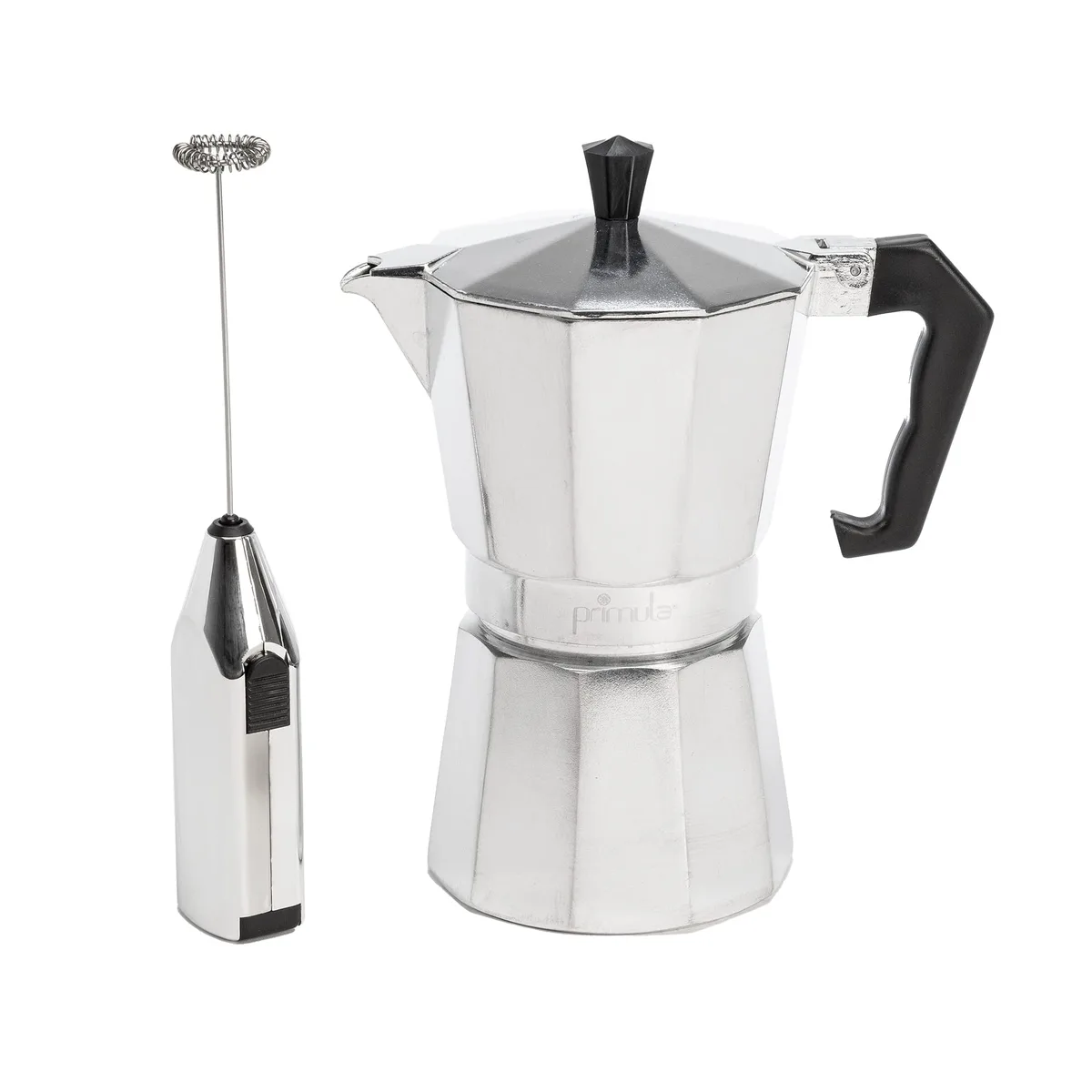
Handheld immersion frother, $10 to $25. Works best with milk already heated to 140°F on the stove. Submerge and run for 20 to 30 seconds.
The foam is airy and settles quickly. Not ideal for latte art. But for a morning latte, it works fine.
Stovetop steam pitcher, $30 to $60. A dedicated pitcher with a built-in steam arm. You heat water in the base and the steam reaches a separate milk chamber.
Produces better microfoam than a handheld, but takes up stove space and requires cleaning the steam channel.
Both options are quiet and portable. They don’t match the consistency of an automatic frother, but they also don’t tie you to an appliance. Start with a handheld if you’re on a tight budget.
Upgrade to an automatic only if you find yourself wishing for hotter milk or less cleanup.
Mistakes That Keep You from Getting Silky Microfoam
You can own a steam wand and still produce soapy bubbles. The difference between cafe-quality microfoam and a sad layer of froth comes down to a few common errors.
The biggest one is overheating the milk. Once it passes 160°F, the proteins break down and you get a thin, watery foam. The Specialty Coffee Association recommends a target of 140 to 155°F.
Use a thermometer until you can judge by feel. A good rule is the pitcher becomes too hot to hold for more than a few seconds.
Another frequent mistake is starting with the steam tip too deep. If it’s fully submerged, you never introduce air. You only heat the milk.
The tip should sit just below the surface, near the side of the pitcher, to create a whirlpool. That vortex pulls air into the liquid and stretches the foam evenly.
Then there’s the timing. Stretching the milk too long produces stiff, dry foam with large bubbles. Ideally, you stretch for the first five to eight seconds, then fully submerge the tip for the rest.
This gives you a smooth, shiny microfoam that pours like paint.
What about automatic frothers? The same overheating issue applies. Many models default to a high temperature. If your automatic frother produces burnt-tasting foam, try running it on the cold setting or pulsing it to keep the milk below 155°F.
Finally, always start with cold milk. Warm milk won’t foam as well because the proteins have already begun to denature. Straight from the fridge is best.
For plant-based milks, look for "barista" blends that contain stabilizers for better frothing. If you want to see perfect microfoam in action, check the drinks on the Three Birds Menu With Prices for inspiration.
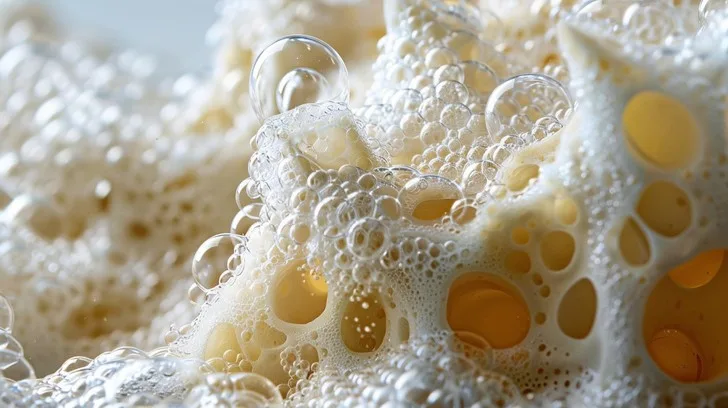
The picture above shows microfoam on the left (small, uniform bubbles) versus macrofoam on the right (large, unstable bubbles). The difference is mostly technique, not equipment.
Frequently Asked Questions
How long does it take to learn how to steam milk properly?
Most people need about 10 to 15 practice sessions to get consistent microfoam. The learning curve is steepest for the first five tries. After that, muscle memory takes over.
Start with cold milk, a clean wand, and a thermometer.
Can you use an automatic frother for latte art?
Not really. Automatic frothers produce dense foam with bubbles that are too large for fine art. You can pour a simple shape like a dot or a heart, but rosettas and tulips require the controlled texture of a steam wand.
What is the difference between frothed milk and steamed milk?
Steamed milk is heated and aerated at the same time, creating microfoam with a velvety texture. Frothed milk is usually just aerated without careful heating, producing larger airy bubbles. Steaming is the barista method.
Frothing is the home shortcut.
Why does my milk smell burnt after using the frother?
That means you overheated it. Milk sugars scorch above 160°F. The fix is simple: stop steaming earlier.
Use a thermometer or touch the pitcher. The moment it becomes too hot to hold, you are done.
Do plant-based milks work in all frothers?
Oat milk and soy milk froth well in most machines if you choose the barista version. Almond milk is hit or miss because it has less protein. Coconut milk separates easily.
Many cafes like those listed on the Kiki On The River Menu With Prices use barista oat milk for consistent results. Check your frother’s manual for recommended milk types.
How do you clean a steam wand properly?
Purge the wand immediately after each use. Wipe it with a damp cloth. Then purge again to clear any milk residue inside.
Once a week, soak the tip in hot water or a descaling solution. Never let milk dry on the wand. It forms a stubborn crust.

Similar Posts