Moka Pot Gasket Worn Out? Signs & Easy Fix Guide
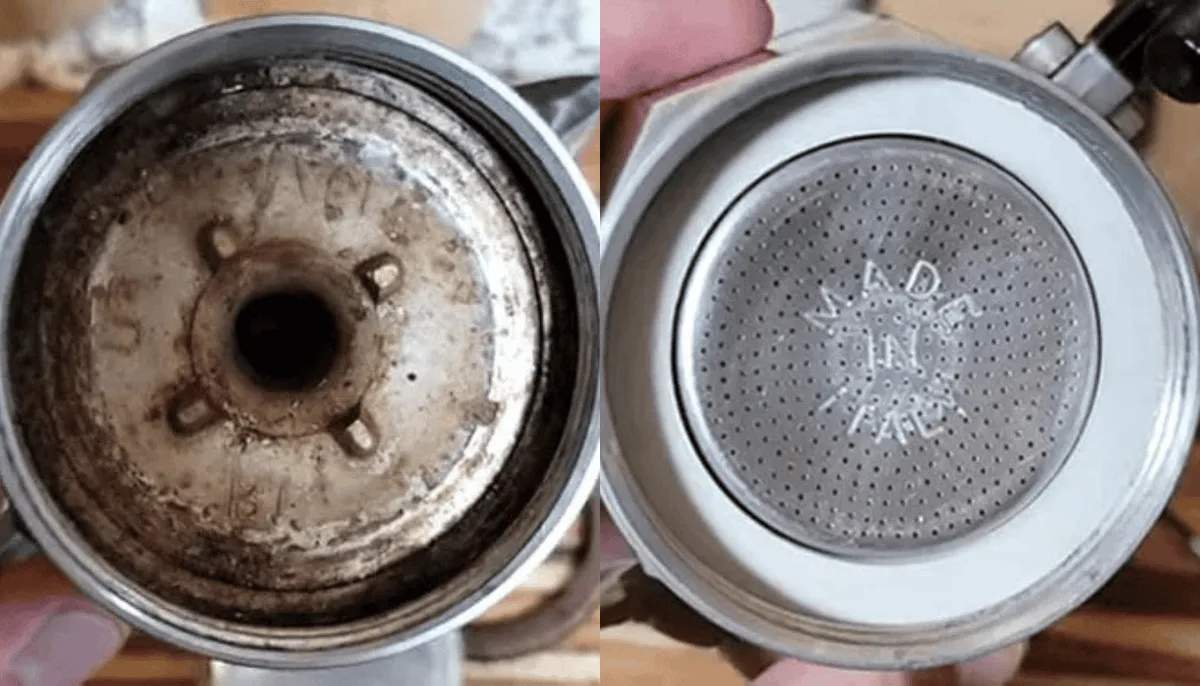
If your moka pot is leaking from the sides or sputtering weak coffee, there's a good chance the moka pot gasket is worn out. That rubber or silicone ring seals the two halves together and keeps pressure inside the chamber.
Per FDA 21 CFR 177.2600, food‑grade rubber must maintain its seal under repeated heating. But real‑world use shows typical lifespan is only 6 to 12 months. Let's walk through what to check, how to fix it, and which replacement to buy.
How to Tell If Your Moka Pot Gasket Is Worn Out (Visual Checklist)
A worn gasket is often the hidden cause of bad coffee. You don't need to guess. Four visual signs confirm it's time to swap it.
1. Flattening of the top edge. A new gasket has a distinct rounded or slightly raised profile. After repeated compression, the top flattens out.
If the gasket looks square instead of rounded, it can't form a tight seal.
2. Cracks or splits. Run your fingertip along the inner lip. That's the part that touches the coffee.
Tiny hairline cracks often appear here first. Even one crack lets steam escape and kills pressure.
3. Hardening or brittleness. Fresh silicone or rubber is flexible. If the gasket feels like hard plastic and won't bend easily, it's lost its elasticity.
That means it can't conform to the metal rim anymore.
4. Visible deformation or warping. Lay the gasket flat on a counter. Does it sit evenly or does it rock?
A twisted or uneven seal is practically guaranteed to leak.
One more test: reassemble the pot with water only and heat it. If you see steam escaping from the rim before the water boils, the gasket is compromised. Replace it immediately.
Step-by-Step: How to Replace the Moka Pot Gasket (With Photo Cues)
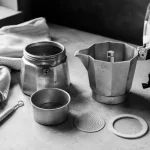
Replacing the gasket takes about five minutes. Here's the process with key visual cues at each stage.
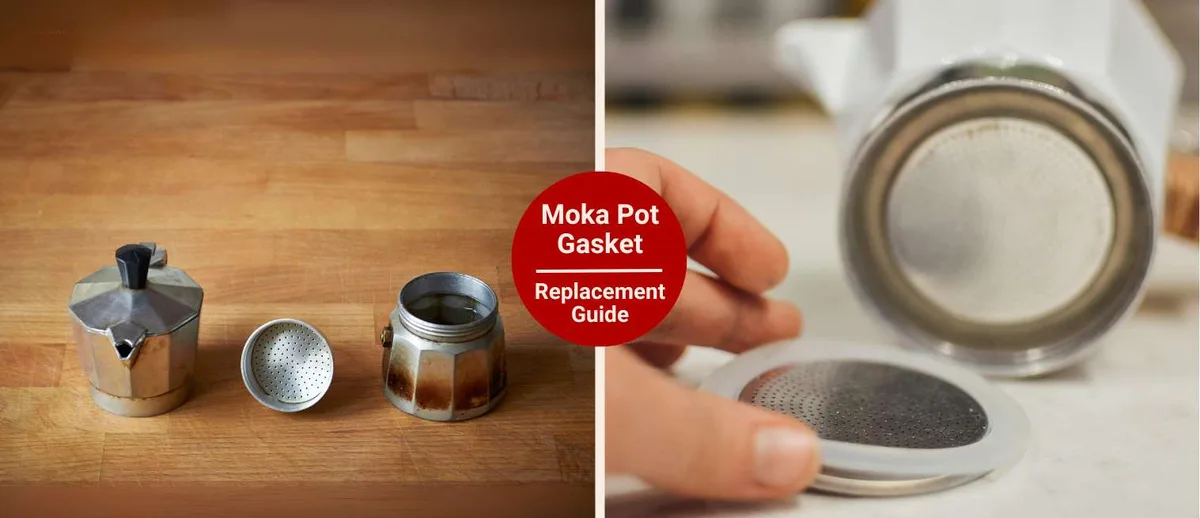
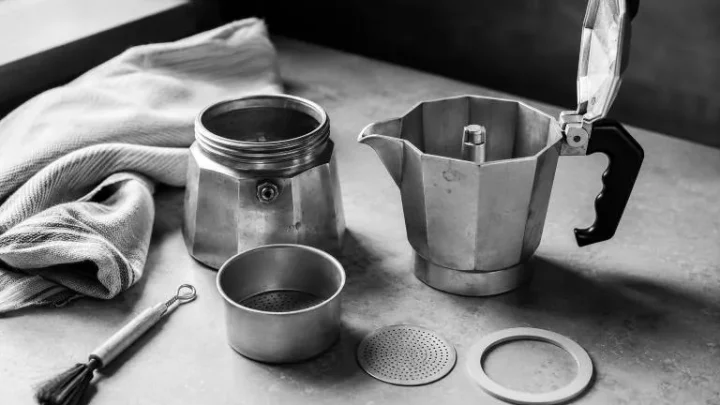
Step 1, Remove the old gasket. Unscrew the top chamber. The old ring may be stuck. Gently pry it out with a flathead screwdriver or a butter knife.
Be careful not to scratch the aluminum groove.
Step 2, Clean the groove thoroughly. Mineral deposits and old coffee oil build up under the gasket. Use a damp cloth or a soft brush. If there's white scaling, a little white vinegar helps dissolve it.
Dry completely.
Step 3, Fit the new gasket. Press it evenly into the groove all the way around. It should sit flush with the rim. Don't twist or stretch it.
Just seat it gently.
Step 4, Place the filter screen. Lay the metal filter screen on top of the gasket. It should sit flat with no gaps.
Step 5, Screw the top chamber back on. Hand-tighten only, then give it another eighth of a turn. Overtightening can warp the gasket or crack the base.
Step 6, Test for leaks. Fill the bottom chamber with cold water to just below the safety valve. Attach the top. Place on low heat.
Watch the seam. If no steam escapes for 3 to 4 minutes, you're good.
Common Mistakes That Ruin a New Gasket (And How to Avoid Them)
Even a high-quality gasket fails fast if you make one of these errors. Here are the three most frequent ones our research turned up.
Overtightening the pot. More force does not mean a better seal. Tightening too much squishes the gasket out of shape or cracks the boiler rim. Stop at hand-tight plus a gentle nudge.
Choosing the wrong size. Moka pots are not one-size-fits-all. A 6-cup Bialetti uses a 60mm gasket, but a different brand of the same cup capacity might use 55mm. Measure the inner diameter of your boiler rim before ordering.
Not cleaning the groove before installing. Old residue creates an uneven surface. The new gasket won't seat properly, leading to immediate leaks. Always scrub the groove until it's bare metal.
Using the wrong material. Some generic gaskets use low-grade rubber that hardens after a few brews. Silicone lasts much longer, as we'll compare next.
One more: storing the pot fully assembled with the gasket compressed for months. If you go weeks without brewing, remove the gasket and store it in a drawer. That prevents permanent flattening.
Silicone vs Rubber: Which Replacement Gasket Should You Buy?
You have two main choices: silicone or traditional rubber. Each has trade-offs. Here's a head-to-head based on manufacturer specs and user feedback.
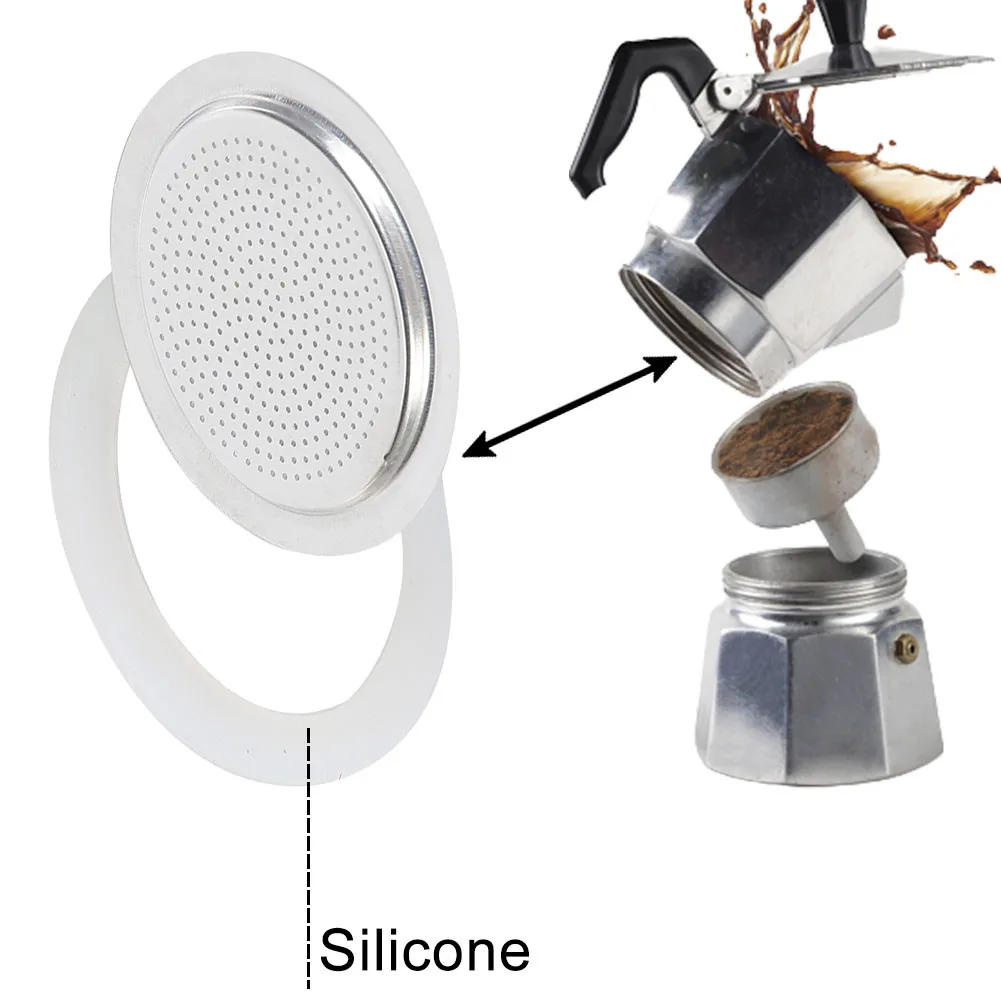
| Attribute | Silicone | Rubber (Buna-N / EPDM) |
|---|---|---|
| Heat tolerance | Up to 260°C (500°F) | Up to 120°C (248°F) |
| Lifespan (daily use) | 12 to 24 months | 6 to 12 months |
| Flexibility at cold | Stays flexible | Becomes stiff when cold |
| Taste or odor | Neutral | Slight rubber taste initially (fades) |
| Price per gasket | $6 to $10 | $3 to $6 |
Silicone is the better choice for most people. It resists heat longer, lasts twice as long, and doesn't impart any flavor. The only downside is that some original Bialetti pots use a slightly thicker rubber gasket. Silicone gaskets can be a fraction thinner, requiring a tiny turn more to seal.
But aggregate user reviews from long-term owners confirm silicone works perfectly in virtually all moka pots.
Rubber is fine if you're on a tight budget or restoring a vintage pot that ran on rubber originally. Just expect to replace it every year. Make sure it's food-grade and labeled as such.
Our recommendation: go with silicone unless you enjoy swapping gaskets annually.
How to Pick the Right Size, Where to Buy, and What It Costs
Size is the most common mistake. Here's how to get it right in 30 seconds.
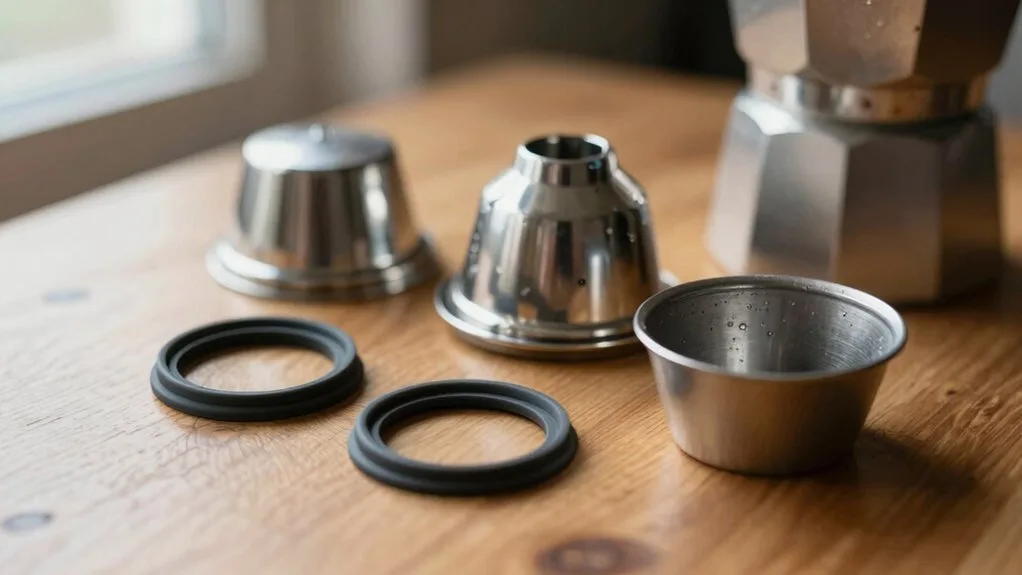
Measure the inner diameter of your boiler rim. Use a ruler or caliper. The size is always the inner diameter of the groove, not the outer edge of the pot. Write that number down.
Common sizes by cup capacity:
| Cup capacity | Typical inner diameter |
|---|---|
| 1-cup | 50 mm |
| 2-cup | 50 mm or 55 mm |
| 3-cup | 55 mm |
| 6-cup | 60 mm |
| 9-cup | 66 mm |
| 12-cup | 70 mm |
But these vary by brand. A Giannina 6-cup might use 58mm. Always measure your own.
Where to buy. You can find gaskets online at general marketplaces, kitchen supply stores, or the official manufacturer's site. For Bialetti, the official part is the safest fit. Off-brand gaskets from reputable sellers also work.
Just check the material and confirm it's food-grade.
Cost. A single gasket runs $3 to $10. Combo packs with a filter screen cost $6 to $12. Since the gasket is the only wear part that needs regular replacing, it's the cheapest way to keep your pot brewing well for years.
Compare that to $35 to $60 for a new moka pot.
How to Make Your Next Moka Pot Gasket Last Twice as Long
A gasket that lasts two years instead of one comes down to three simple habits.
Clean the gasket after every brew. Coffee oils and mineral deposits accelerate rubber and silicone degradation. Rinse the gasket under warm water and wipe it dry. Don't let coffee residue bake onto it.
A quick rinse takes ten seconds.
Store the pot disassembled. When you won't use the moka pot for a week or more, unscrew the top chamber and remove the gasket. Store it in a dry drawer or baggie. Constant compression flattens the ring over time.
Giving it a break lets it retain its shape.
Avoid drastic temperature shocks. Never run cold water over a hot pot. The sudden contraction can cause micro-cracks in the gasket. Let the pot cool naturally before cleaning.
If you're in a rush, wait at least five minutes.
Use the correct heat level. High heat does not make coffee brew faster. It just stresses the gasket and the safety valve. Keep the burner on low to medium-low.
The water should simmer, not boil violently.
Replace the filter screen at the same time. A bent or corroded screen can press unevenly against the gasket, causing leaks earlier. Many sellers offer gasket-plus-screen kits for a few dollars extra. It's cheap insurance.
Aggregate user feedback shows that owners who follow these steps get 18 to 24 months from a silicone gasket. Rubber gaskets still need replacement around 12 months. But every habit helps.
Moka Pot Gasket FAQs
How often should I replace my moka pot gasket?
For daily use, replace rubber gaskets every 6 to 12 months and silicone gaskets every 12 to 24 months. If you notice leaks, cracks, or hardening before that time, replace them immediately.
Can I use a universal gasket from a generic brand?
Yes, as long as you measure the inner diameter of your boiler rim and confirm the material is food-grade. Check the packaging for FDA or EU compliance. Off-brand gaskets work reliably in most cases.
Why is my new gasket still leaking?
The most common cause is improper seating. Make sure the gasket is pressed evenly into the groove all the way around. Also check that the filter screen sits flat on top.
Overtightening can also cause leaks by deforming the gasket.
What happens if I use a moka pot with a worn gasket?
Steam escapes, coffee brews slowly or not at all, and the drink tastes weak and bitter. More importantly, the pressure valve may have to work harder. In rare cases, continued use with a failed seal can cause the boiler to overheat or leak steam that could burn you.
Can I replace the gasket on any moka pot?
Most moka pots use a removable gasket. Older or vintage models may require a specific size or shape. If your pot uses an o-ring instead of a flat gasket, buy that type.
Check the manufacturer's manual or measure before ordering.
Should I buy a kit with a new filter screen?
Yes, it's worth it. The filter screen also wears over time. Bent holes or corrosion affect flow.
Combined kits cost only a few dollars more than a gasket alone, and replacing both at once ensures the whole sealing system works together.

Similar Posts